Zero-G Datafile Vol. 1
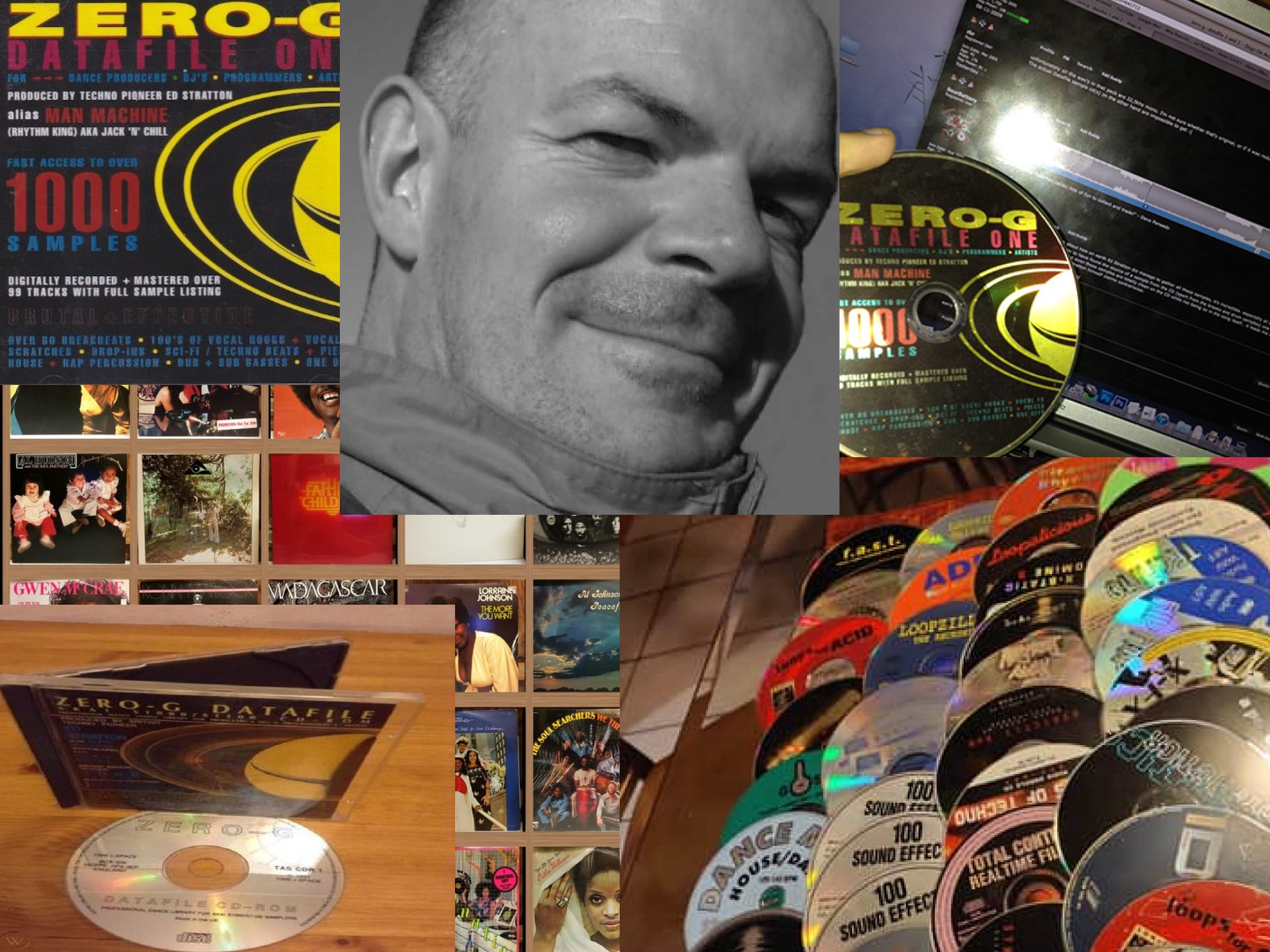
There was no template for this. In May 1991, when Zero-G's Datafile One landed, the concept of a dance music sample CD was just emerging. Producers were sampling off vinyl onto hardware with a few megabytes of memory, passing cassette tapes around, or paying for synthesizer RAM cards that gave you one manufacturer's idea of what sounds you should want. Datafile One changed the premise entirely: one disc, 1,000 samples, everything from breakbeats to vocal hooks to sci-fi FX, designed specifically for the people making UK dance music.
Who Made It
Ed Stratton holds a B.Mus Tonmeister degree from the University of Surrey and spent eight years as a recording engineer at Capital Radio in London before leaving to make music. In 1987, he co-produced "The Jack That House Built" with Vlad Naslas under the name Jack 'N' Chill. The track flopped on first release and hit number six in the UK on the second attempt in February 1988, making it the first UK-produced instrumental house tune to reach the British top ten. He then signed to Virgin Records and Rhythm King Records as a solo artist called Man Machine, and his 1990 album "Step Into Time" reached number three on the Gallup Dance Album Chart.
The point is that Stratton was not an outside observer packaging other people's sounds. He had been inside the UK dance music scene since before it had a name, building a private sample collection the whole time. Datafile One was that collection, opened up. He had the idea in 1990, delivered the disc in 1991, and formally incorporated Zero-G Limited in early 1992 alongside Julie Stratton, who also co-founded Time+Space as the distribution arm.
What's Inside
One thousand and something samples on a single disc, with roughly one second of silence between each one. An eight-page booklet documents the contents. The breakbeats are the foundation: over 100 of them, mostly sourced from late 1960s and early 1970s funk and soul records. Around them: vocal hooks, vocal FX, ambient effects, scratches, sci-fi and techno FX, house and rap percussion, dub and sub basses.
The disc was designed for the Akai S1000 and S1100, the dominant hardware samplers of the era, and later became available in Akai-native format on CD-ROM. Loading samples meant physically playing the disc into your sampler and recording them in. There was no drag-and-drop, no automatic tempo tagging, no preview function. You worked through the booklet, found what you needed, and sampled it in. Short percussive sounds were repeated once on the disc as a convenience.
The breadth is the defining characteristic. This is not a genre-specific toolkit. It is closer to a producer's working archive made public: everything Stratton had found useful across a career that ran from Capital Radio through a top ten house record to a dance chart album.
How It's Been Used
Specific production credits are nearly impossible to trace. The disc carried no commercial user licence — it was sold for personal and inspirational use only, with no legal disclaimer on the CD or its packaging. Producers who used it in commercial releases had no paperwork trail and no incentive to disclose it. Forum consensus across Gearspace, KVR, and Dogs on Acid is that it was pervasive throughout early 1990s UK dance production, though individual credits remain undocumented. Community efforts on WhoSampled and RollDaBeats have been working through the 1,000 samples to identify their original sources, with the breakbeats the most tractable and the FX and vocal sections the hardest to trace.
The Rare Find
Within twelve months of release, Datafile One had been bootlegged. Someone had pressed a separate CD containing samples lifted directly from the disc and was selling it. Zero-G issued a warning to their customers: "Do not fall into the trap of buying the same samples twice."
The disc that prompted this warning was itself built entirely from uncleared samples — breakbeats, vocals, and effects lifted from funk and soul records without licensing. No disclaimer appeared on the original CD or booklet. The copyright situation was unresolved in both directions from the moment it shipped.
A library of other people's sounds, sold without commercial clearance, popular enough to be worth copying within a year of release. That is what the first dance sample CD looked like. Worth having.