Norman Cook - Skip to My Loops
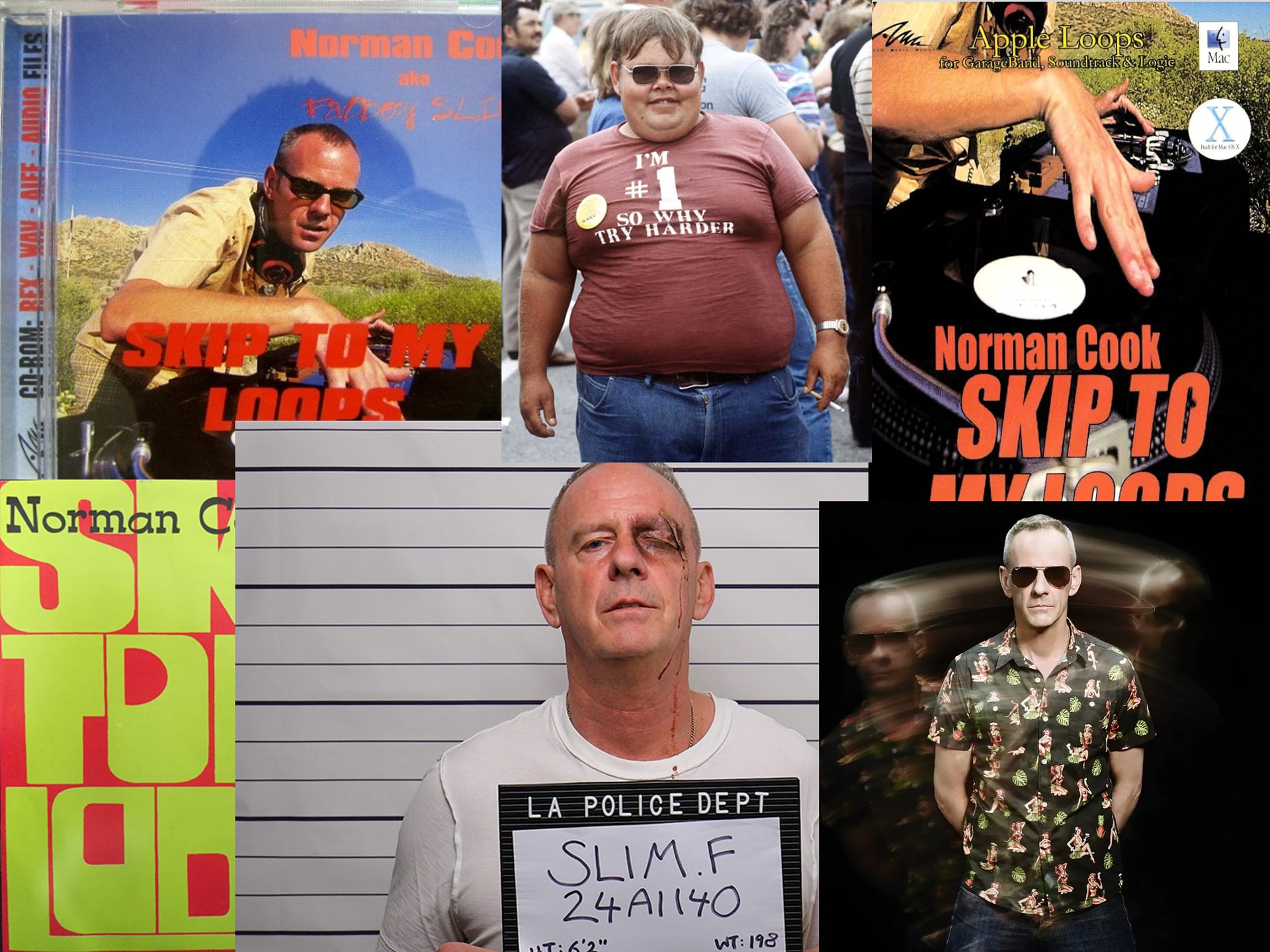
By 1992, Norman Cook was composing music for a Smurfs video game to cover his debts. Beats International had dissolved. His marriage had ended. The number one hit from two years earlier had already cost him a legal dispute with The Clash over a bassline he'd lifted without clearing. He was rebuilding, years before anyone had heard of Fatboy Slim, and somewhere in that gap he made a sample CD that most people who used it have never thought twice about.
Who Made It
AMG, The Advanced Media Group, had been producing sample libraries since the late 1980s out of Hampshire, and their HitSound Producer Series carried names that meant something: JJ Jeczalik of Art of Noise, Coldcut, Pascal Gabriel, who made the first-ever dance sample CD. Cook belonged in that company. He'd been the bassist in The Housemartins, helped write a UK chart-topper with Beats International, and remixed records for half the British dance industry before he was thirty. Skip to My Loops was released in 1992 as part of that series. In the context of what Cook's career looked like that year, it was one of the more substantial things he had going.
What's Inside
The disc runs over 70 minutes and is organized in sections: main loops first, then percussion loops, then single hits, FX, short musical phrases, and finally vocal and FX samples. Tempos stretch from 84 BPM up to what AMG's own catalog copy called "obscenely fast." The breakbeats are the foundation, funk-sourced and varied in feel rather than uniform in character, but the surrounding material is wide: bass loops, guitar, brass, flute, sax, reggae rhythms, synth cuts. It covers the same spread Cook was pulling from in his own production work, which is the point.
The disc comes with a demo track built from the library's contents. Per WhoSampled's documentation, it draws directly from Kym Mazelle's "Useless," Earth Wind & Fire's "Africano," Wah Wah Watson's "Good Friends," and DJ Chuck Chillout and Kool Chip's "Rhythm Is the Master." Which is to say the demo is Cook doing what Cook does: breaking other people's records into parts and putting them back together as something else.
How It's Been Used
Specific credits are hard to find. The disc predates the forums that would later document this kind of usage. AMG reissued it in 1998 on CD-ROM format, then in subsequent years as WAV, REX, Apple Loops, and Reason ReFills, which suggests it sold consistently enough to keep reformatting. Beyond that, the trail goes cold. What exists instead is a 2004 thread on VI-Control where producers started asking about the copyright situation: the loops were built from uncleared source material, and nobody was sure how far that liability extended to anyone who used them commercially. The consensus was "dodgy." Drums and percussion: probably fine. Distinctive melodic content in anything that earns money: a risk.
The Rare Find
Cook had described early sampling culture as "like the Wild West," a period where you genuinely didn't know what you could get away with, until the money arrived and the lawyers followed. He knew that firsthand. After "Dub Be Good to Me" hit number one, The Clash called. The bassline was a note-for-note lift from "Guns of Brixton," uncleared, and suddenly there was a conversation to be had. Cook settled it, came to an arrangement with Paul Simonon, and described the whole thing as a lesson he'd absorbed.
Two years later, he put out a sample library containing loops sourced from Kym Mazelle, Earth Wind & Fire, and Wah Wah Watson, none of them cleared. The VI-Control thread from 2004 circled around the irony without quite landing on it: a producer who had been on the wrong end of an uncleared sample dispute was now selling a product that passed exactly that problem to whoever bought it. Cook had said publicly there was a difference between lifting a hook and lifting a single sound. Skip to My Loops tests that distinction from both sides at once.
It is underrated as a document of how the sample economy actually worked in the early '90s, and as a snapshot of a producer between versions of himself. Worth finding.